
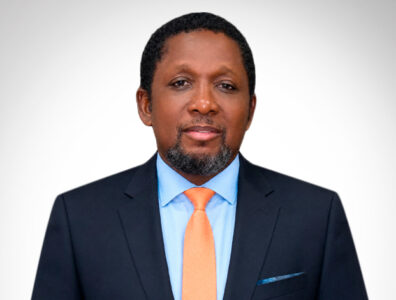
Adebayo Ige, CEO of International Energy Services Limited (IESL), talks to The Energy Year about how Nigeria’s Decade of Gas is translating into projects for indigenous operators, the growing capabilities of Nigerian companies and IESL’s strategy to expand from services into asset ownership and selected African markets.
International Energy Services Limited is a Nigerian provider of engineering, project management and oilfield services.
- Nigeria’s Decade of Gas is generating a pipeline of upstream and infrastructure projects, with IESL providing engineering services as indigenous operators take a larger role in developing the country’s oil and gas resources.
- IESL is seeking to evolve from a service provider into an asset-based energy company, with plans for an LNG project and potential upstream participation to secure its long-term gas supply.
- The company is expanding selectively across Africa through partnerships with local companies, using its Nigerian engineering and project experience to build capabilities in markets including Ghana, Mozambique and Equatorial Guinea.
How is Nigeria’s Decade of Gas initiative translating into projects for IESL?
Most of the gas reserves that we have now were discovered by accident – the exploration was actually for oil. If we started actively exploring for gas, we could triple or quadruple what we have now. There is a lot of potential, and the government is starting to go beyond talk to actually trying to do things.
IESL is among the companies championing projects under the Decade of Gas initiative. The challenge is that to monetise gas, you need an end-to-end contract. You cannot store it and wait for somebody to buy, as you can with oil. The government is therefore trying to structure projects that can unlock gas and make the contracting cycle shorter and more predictable.
UTM Offshore’s FLNG project is one example. We participated in the FEED, supporting JGC. It should be producing by now, but has been stalled by regulatory issues. Nigeria LNG’s Train 7 is under construction and will significantly increase production capacity. The question is whether there will be enough feed gas. The first six trains are not operating at capacity because of insufficient gas supply.
Several projects are intended to address this. The Final Investment Decision (FID) has been taken on the HI field. IESL recently completed the Front End Engineering Design (FEED) for SNEPCo on the HA gas block, which will transition to Renaissance Africa Energy, and we are commencing the FEED for HB, another gas block. We also just completed the FEED for the Ima gasfield for Total and Amni Energy, which has moved into the EPC bidding process. There are several gas projects moving in parallel, indicating that the government is serious about the Decade of Gas.
What do major gas infrastructure projects and IOC divestments mean for Nigeria?
The Nigeria-Morocco gas pipeline is a fantastic investment, not just from the point of view of unlocking gas but because of the co-operation it will require among African countries. The West Africa Gas Pipeline already has infrastructure from Nigeria through Benin and Togo to Ghana. It still needs to reach Côte d’Ivoire. There is also another potential pipeline from Algeria to Nigeria. These are interesting times.
Regarding divestments from IOCs to indigenous companies, Nigeria absolutely has the capacity to take them on. We have been at the forefront of oil and gas exploration in West Africa for a long time and have deepened our capabilities. Renaissance taking over Shell Petroleum Development Company demonstrates that. Production was about 150,000 bopd when it took over and, in less than one year, output doubled. The intention now is to triple it. You cannot do that without capacity.
Seplat’s acquisition of ExxonMobil’s assets is another example. Those assets are expected to produce 600,000 bopd at peak. Production had fallen to about 120,000 bopd, and Seplat intends to reach 300,000 bopd in the short term before moving towards peak production. The key constraint is not technical know-how but financing. Nigerians have demonstrated over time that we can deliver. What we need is the financial backing. Luckily, the government is investment-friendly, and the country is attracting FDI.
How can Nigeria make its next generation of energy projects more bankable?
The first requirement is commercial viability. The second is an adequate regulatory environment. Capital comes from abroad, for the most part, and regulation is extremely important to international companies. They need confidence that they can bring capital into an environment where there is regulatory consistency. After commercial viability and regulatory consistency, the third element is financing. Financing comes on the back of the first two.
The investment environment has never been better than it is today. The government has introduced three executive orders in succession aimed at reducing bureaucracy around contracting and taking projects from initiation to first oil. The international community is responding very well to that. The important thing is to maintain that consistency.
How has IESL evolved since 2023, and how are you moving from services into asset ownership?
IESL has evolved considerably over 35 years of continuous operation. We have grown into a company with five business units. Engineering design is our flagship – we are a top-three company in Nigeria – but we also offer environmental analysis, manpower and project management services, as well as power and renewable energy services.
We also have three subsidiaries and joint ventures. IESL Doris is a joint venture with the French company Doris, in which we hold 55%. We have Stat Marine, another joint venture with a French company, and Petrofield, which we started this year. Petrofield will deepen our maintenance capabilities and take us into subsurface services to support drilling and other operations.
Part of our strategy since 2023 has been to migrate from being just a service company to becoming an asset-based business as well. We are pursuing two goals. The first is the LNG project we have been working on for quite a while, and the second is having ownership in a gas field to support the LNG project over its expected 25-year lifespan.
For the LNG project, we have an MoU with NNPCL as part of efforts to secure a steady supply of gas, although the broader arrangement has not yet been finalised. The plan is to channel 20% of the facility’s output to the domestic market and export 80%. We already have several MoUs with international parties willing to take the LNG.
There are four elements to the project: location, offtake, finance and gas supply. The location is firm, the gas supply is in advanced stages of negotiation, and offtake is not a problem.
On finance, we have been working with Afreximbank for a little over two years. We are talking about billions of dollars, so Afreximbank is not going to provide all the money. The agreement signed with Future Union Qatar is intended to support the development of our LNG project, with Future Union potentially participating in the financing syndication.
What differentiates IESL in Nigeria’s engineering and energy services market?
We provide value: the best possible service at the best price point we can offer. We are also a very responsive organisation. When you look at the number of international companies willing to partner with IESL in Nigeria, it comes down to credibility. We are reliable and professional, and we focus on providing value to our clients.
We have worked with companies such as Chevron, ExxonMobil, Total and Shell for more than 20 years, and they keep coming back. These are complex projects, including FPSOs. In Nigeria’s engineering space, I do not know of another company with the breadth of experience we have in FPSO design. There is market confidence in IESL, and our challenge is to continue to justify that confidence by constantly improving what we do.
What is IESL’s strategy for expanding across Africa?
Our regional expansion is opportunity-led. In countries where there is sufficient development in the energy sector and where our expertise can add value, we take a close look at the opportunity. But we do not enter these markets as IESL alone. Wherever we have expanded, we have worked with credible local partners so that the operation functions like a local company.
Today we are in Ghana, Mozambique and Equatorial Guinea. In Equatorial Guinea, we have a joint venture with GEPetrol, and the relationship is working very well. GEPetrol personnel come to Nigeria from time to time to understand our operations. Whenever we enter a country, the objective is not only to do business but also to deepen local knowledge and capabilities. Nigeria has an advantage because of the depth of experience accumulated over many years, and we can help other markets build capability faster.
We are disciplined about where we operate. For example, we pulled back from Angola when it became difficult to repatriate profits. So the market opportunity and the ability to establish the right local partnership both have to be in place.
Where would you like IESL to be in two years?
In two years, we would like to have transitioned from a purely service-based company towards an asset-based company. We would like the LNG project to be in execution and, potentially, to have some form of upstream participation to support the project’s gas supply, whether through a farm-in or participation in existing assets. Making that transition from purely service-based to asset-based will be a major objective for us over the next two years.
Source: theenergyyear.com